If Life Is Love
To order Chuck’s new book, If Life Is Love, send an email to chuckmadansky@gmail.com with your name, mailing address, and an inscription if you would like one in the book. The cost of If Life is Love is $23, which includes shipping, and payments can be made via Venmo @wilderness-sarchild or by check made out to Chuck Madansky and sent to PO Box 2034, Brewster, Ma, 02631.
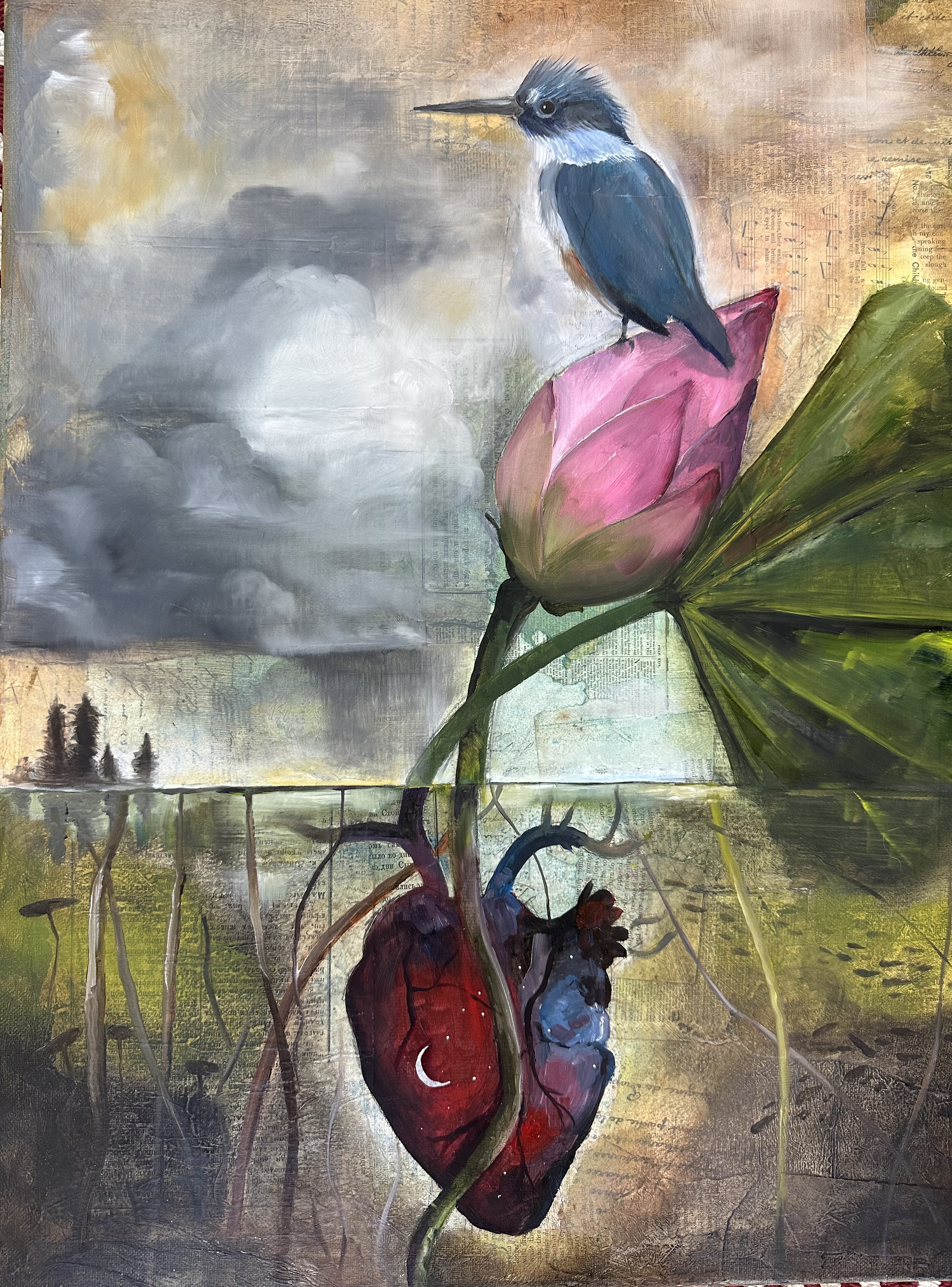
As Confucius writes, We have two lives, and the second begins when we realize we only have one. Chuck Madansky’s intelligent, poignant and sensitive second collection, If Life Is Love, embodies this adage. The speaker’s cardiologist tells him he’s due to die in five years. Though that knowledge causes fear and trembling, it makes for heartfelt poems of deep attention and appreciation—clear-eyed poems that understand the suffering of the world but choose to privilege our lonely hope. These poems thrum with gratitude; they comfort and illuminate. Madansky deftly connects Aristotle and Oreos, Pandora and Goldilocks. And perhaps, in the end, it is the simplest experiences that teach us how to live. Here is what I know: this morning/the fog would not leave the pond/ until almost noon. By then, our dog/ had led me through the woods/ bathed in mud, rank and happy.
—Jennifer Franklin, author of If Some God Shakes Your House.
Chuck Madansky’s latest book of poetry will draw you in, poem by poem, and leave you with a core choice: to perceive new associations and connections outside of your habitual framework of reality, or to cling to the comfort of your own small story, in love with what’s in the way/ of love in you. Through twists and turns that are funny and sad and immensely beautiful and deeply profound, Chuck invites us off the threshold to take a swim with him out into the expansive field of infinite possibilities. What a gift!
—Xochitl Hazel Trout, curator of Wild Words: Ferociously Nourishing Poetry.
In language that is rich, resonant and full of acutely observed detail about the natural world and our human part of it, Madansky’s collection is a praise song to all of life, which holds so much to love, so much to grieve. He says I tilt toward the single blade/ of grass, spring-born/ forcing its way/ through heart rubble. Here, as in other poems, the heart is a central image, the literal failing heart muscle, and the metaphorical heart, failing to love fully. In these poems, death is not the end of life, but part of the cycle that leads back to life. These are poems we can return to in times of despair, not because Madansky denies despair, but because we are invited on the poet’s journey to see and love all of life.
—Lucile Burt, author of The Cone of Uncertainty.
Some Days The Spoons Talk Back

Chuck Madansky’s stunning book fashions grief into a sheer organza and joy into something as concrete as a cinderblock. It makes prayer political and the political ring with music. I can’t think of a recent book that explores the spectrum of human experience better. Don’t wait: Visit that strip mall in his poem High Stakes, which houses the office of a low-level seraph making minimum wage, and sit down across from her and watch the world unfold, one playing card at a time.
— James Wyshynski, author of Visiting Hours
To read Chuck Madansky’s poems is to be held and carried by a joyful attention in which the poet speaks to his dishes as he washes them, listens to his plants as he waters them, and approaches even the eating of an apple as a sensual, spiritual act: ‘Delicious, this becoming / each other can go on and on. . . .’ Woven throughout this appreciation of the quotidian are poems celebrating love grown from a long marriage in which ‘neither of [them] ever expected this grace’ and are now looking together at the insistent press of mortality. What’s more, these poems also look outward to grapple with issues of social justice in this country and others, including a forthright exploration of the poet’s own privilege. ‘This more has followed me from birth,’ he writes, calling for ‘a different / kind of light / to say Enough.’ Page after page, Some Days the Spoons Talk Back proves itself a book to return to, offering more with each subsequent reading and the wisdom from a long life, thoughtfully lived.”
— Jessica Jacobs & Nickole Brown, Co-Authors of Write it! 100 Poetry Prompts to Inspire?
Not since Jane Hirshfield has a poet so deftly communicated the human experience to me. In “Some Days the Spoons Talk Back,” Chuck Madansky’s imagery, intelligence, sound and sense, and spiritual connection to the world all work to give us the last giraffe gone from the earth, meditations on marriage, the seasons of life on Cape Cod, and all the splendor of “the moons and worlds,/spoons and rocks, the gnats/and rain and trains and trees.” Mastering forms and structures from the sonnet to the narrative; fable to emblem, this poet mines the interior of grief, pain and longing, threading his Jewish ancestral history against the backdrop of a divided and dying planet. A grandfather of the world, Madansky inquires, perhaps most of all, into our dilemma of impermanence, and, always, the search for compassion. Indeed, “angels gather in unruly crowds.” I always feel changed after reading Chuck Madansky’s poetry, which I consider a salve or an invitation for living with mystery—for living more fully. Go on, “Turn and re-enter the uncertain light.” Why? Because Madansky is a trusted friend. He is listening.
— Janine Certo, author of Elixir, winner of the New American Poetry Prize and the Lauria-Frasca Poetry Prize
This collection is like a core sample, layered with poems about the elemental, the old ways, what’s in plain sight but often missed, the miracle of the natural world, and the tensile strength of relationships, memories, and love. Two threads run through all these layers. One is interesting language that beautifully personalizes and freshens the universal. The other is Madansky’s willingness to take risks, to be honest about his best and worst (and ours, too). In one poem, he writes, “I know this, know it so well / I could shake it like salt / over mashed potatoes / and you could taste my life.” That’s exactly what we do.
— Lauren Wolk, Author of NY Times Bestseller Wolf Hollow
On a foundation of deep knowledge and wisdom about the natural world and human nature, Chuck Madansky builds poems that embrace our selves, our world and our fellow beings in all our contradictions. They celebrate the wonders of our earth and our connections to all that lives here from microbes to beetles to trees to giraffes. They show us how grief can open us to love, how sorrow can turn to joy. In the cycle of life, death is transformation, becoming other life. Madansky’s poems call us again and again to pay attention, to notice everything. They open us to wonder.
— Lucile Burt, Author of The Cone of Uncertainty
I want to meet this loving, intelligent, creative, delicate, open, sensual, witty, deep, good, bruised, open hearted, magical, man of nature who awes me with his words.
I myself have no words for the state of my heart he created.
Can you introduce me?
– His sister Deborah
 Poetry and musings of a country mouse